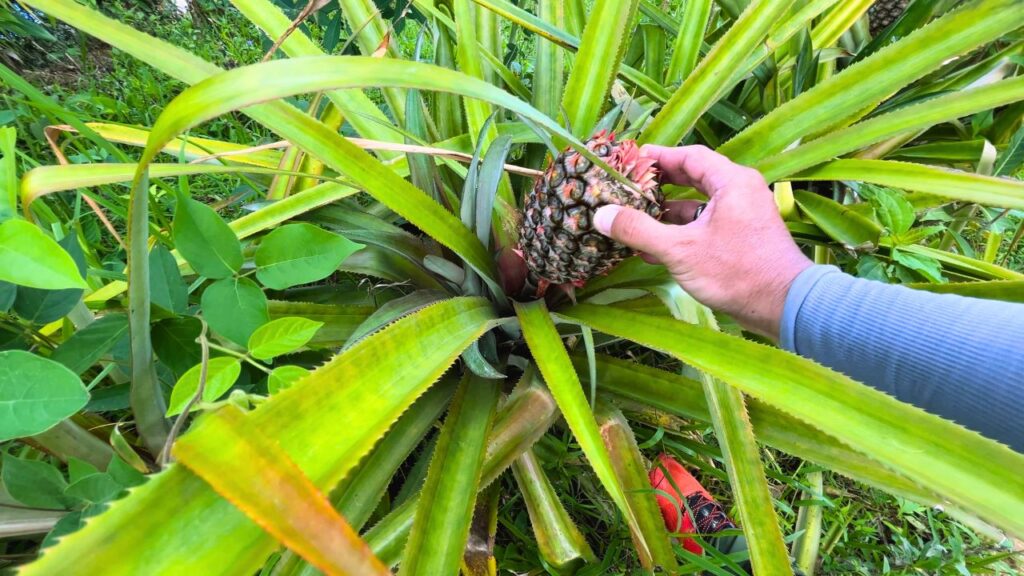
Fruit trees and useful plants are common along mountain roads and community trails.
Mangoes, guavas, coconuts, malunggay, and other herbs may grow close to the path, sometimes without fences or any visible house nearby.
For hikers coming from the city, seeing fruit still hanging from the tree can be part of the experience.
It is not something seen every day, and even a small guava or mango can become an interesting detail to photograph or include in a hiking video.
Visible Does Not Mean Unowned
A tree beside the trail may appear wild or unattended.
In many cases, however, it was planted by a nearby household, farmer, or landowner. The area around it may not look like a formal farm, but the tree can still be maintained, harvested, or reserved for personal use.
The same applies to malunggay and other plants growing along fences, roadsides, and the edges of private land.
Their owners may not be visible when hikers pass through.
Farmers and residents have other work to do and cannot watch every tree or plant throughout the day. Their absence should not be understood as permission to take something.
Picking Without Asking
Some hiking videos show people picking fruit directly from branches or gathering herbs along the route.
A single fruit may appear insignificant, especially when many others remain on the tree.
The situation changes when a trail becomes popular and several groups begin doing the same thing. What looks harmless when done once can become repeated taking from the same property.
The hiker may pass through only once, but the person who planted the tree or maintains the land continues to live there.
Without clear permission, it is difficult to know whether the fruit is meant for the household, for selling, for feeding animals, or simply for harvesting later.
Looking Without Taking
Fruit trees can still be appreciated without removing anything from them.
During fieldwork, fruit may be photographed, shown in video, or briefly held while it remains attached to the branch.
This captures the experience of encountering it along the route without assuming that it is available to take.
There are also practical reasons not to eat fruit found along the trail. It may be difficult to wash properly, and wild-growing fruit such as guava can sometimes be too small or not yet ready.
The more important reason, however, is respect for the land and the people connected to it.
Passing Through Someone Else’s Space
Many hiking routes pass through farms, residential areas, and working landscapes.
They may feel open because there are no gates, signs, or people standing nearby, but they are not empty spaces.
The trees, plants, fences, water sources, and crops encountered along the route may all be part of someone’s daily life and livelihood.
Hikers are usually only passing through.
Seeing fruit on the tree can be a memorable part of the hike. Leaving it where it is allows the next passerby to see it as well and, more importantly, respects the person who may have planted and cared for it.