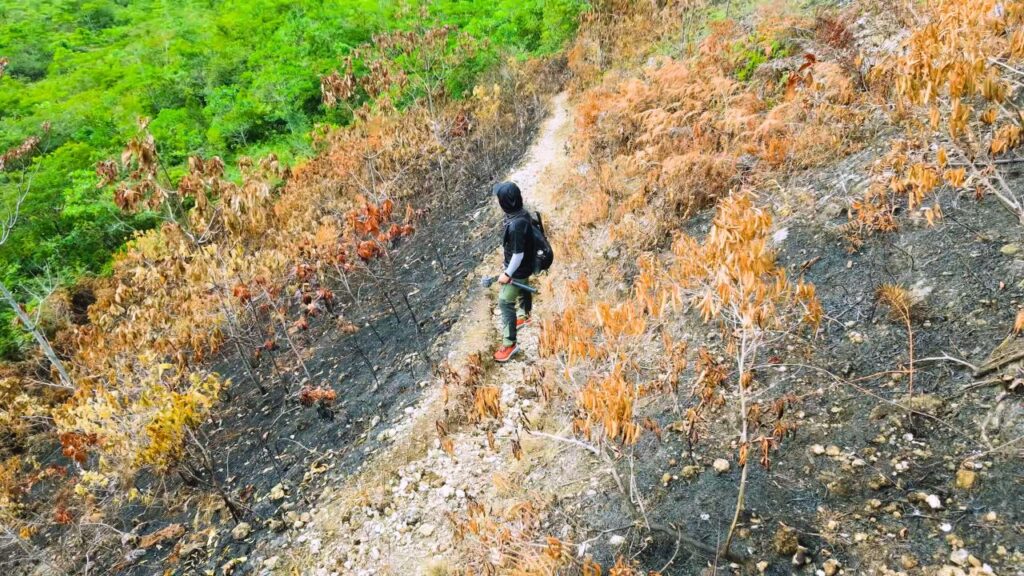
Most hiking photos naturally focus on the summit, the waterfall, or the viewpoint. Yet on many trails, these places make up only a small part of the day.
Much of the journey passes through community footpaths, farms, quiet forests, narrow mountain paths, and other landscapes that rarely become the focus of hiking media. These places may not be destinations on their own, but they form much of the trail between the better-known landmarks.
They are just as much a part of the documented route.
What Appears Between the Landmarks
Across different hikes, the same ordinary details often reappear.
Fruit-bearing trees beside the trail, grazing livestock, small plants growing from rock crevices, quiet sections of forest, and working agricultural landscapes are encountered far more often than dramatic viewpoints. Individually, none of these moments stand out. Together, they describe what walking through Cebu’s mountains usually looks like.
Rather than recording only the places people expect to see, the fieldwork also documents these quieter parts of the journey.
More Than the Destination
A summit or waterfall may become the most recognizable point along a route, but it represents only a small portion of the walk.
The paths leading there often pass through landscapes that receive little attention despite making up most of the hiking experience. Focusing only on the highlights would leave much of the route undocumented.
Recording these ordinary places helps preserve a more complete picture of how the trail actually unfolds.
Not Every Trail Looks the Same
This observation comes from recurring patterns seen across multiple field visits in Cebu.
Some routes spend long stretches in forest, while others pass through farms or mountain communities. The balance changes from trail to trail, but the examples above reflect features that appear often enough to become a consistent part of the field documentation.