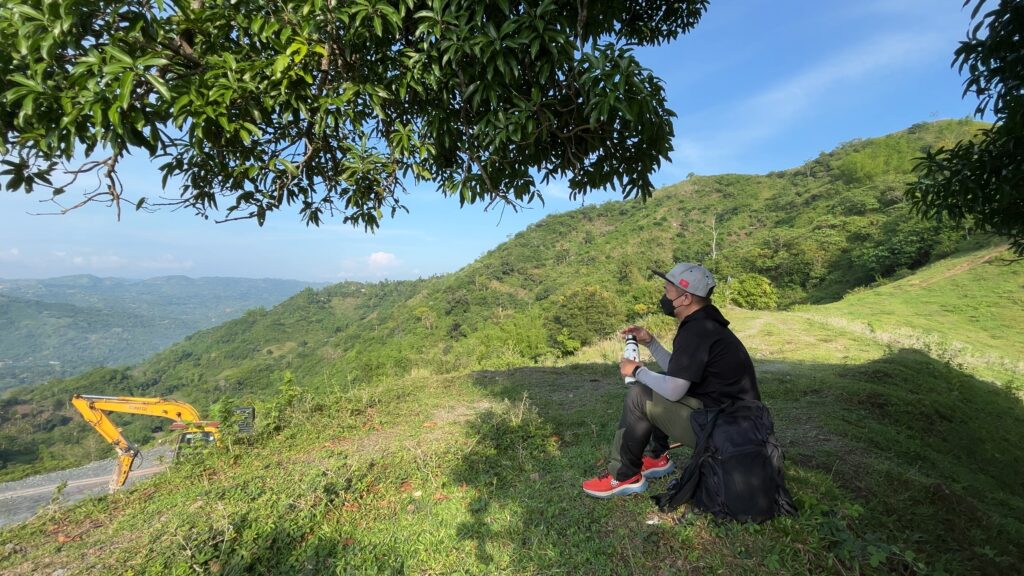
Nature exploration is often associated with mountain summits, waterfalls, and expansive landscapes.
These places are worth documenting, but much of what makes a trail interesting exists between the starting point and the destination.
For beesayatv, the trail itself is the destination.
What Exists Along the Trail
A narrow footpath through dense vegetation may not offer a panoramic view, but it can reveal details that are easily overlooked.
Plants growing along the path, animals encountered during a hike, changes in the ground surface, and signs of human activity all provide information about the surrounding environment.
Some of these observations require stopping, looking more closely, or briefly leaving the walking pace of the hike.
They are part of the fieldwork rather than interruptions to it.
Curiosity and Documentation
Not everything encountered during a hike can be anticipated before the route is explored.
An unfamiliar plant, an unusual feature of the landscape, or a small discovery along the path may become part of the video documentation.
These encounters are recorded as they happen, without the need for narration.
The accompanying field records provide geographical context through GPS tracks, trail-surface observations, and photographs.
The video preserves what was encountered along the way, while the field data records where the hike took place.
Beyond Scenic Destinations
Not every trail leads to a waterfall, summit, or other prominent landmark.
Some connect communities, cross agricultural areas, follow rivers, or pass through narrow stretches of vegetation.
These routes are still worth documenting.
Their value as field records does not depend on whether they offer spectacular scenery or attract a large audience.
For beesayatv, documenting a trail means recording the route and observing what exists along it, not simply reaching the place at its end.
A destination may be the reason for starting a hike, but it is not the only thing worth documenting.